What do you improve when nothing is broken? A different kind of case study.
Most of our case studies follow the same shape. We inherit an account that is broken, badly structured, or measuring the wrong things, we fix it, and the numbers move.
This one is different. This account was set up perfectly fine. But there is always room for improvement.
Clear Ears is a medical clinic specialising in exactly what the name suggests: professional ear cleaning. They approached us in mid 2025. They already had a Google Ads manager, but she was based overseas, and they wanted someone local — someone with genuine knowledge of local areas, local search behaviour and the specifics that come with running a clinic in this market.
Our initial audit revealed absolutely no flaws. No mistakes. No misconfigurations. Everything was set up the way we would have set it up ourselves. We told the owner exactly that, because that is the honest answer and it is the only useful one.
Could we have picked a slightly different strategy? Of course. Could we have changed a few things around the edges? Yes. But the core of the account — keyword selection, campaign structure and conversion tracking — was solid.
When an account is already in good shape, the worst thing an agency can do is tear it apart to look busy. Rebuilding a healthy account resets the learning, throws away historical data, and usually costs the client money before it makes any. So we did the opposite. We focused on incremental improvements and thorough, ongoing data analysis.
We tested new keyword sets, expanded where the data supported it, and cut terms that were pulling traffic without intent.
Every ad in the account was rewritten. Not because the old ones were bad, but because ad copy is the cheapest variable to test and the fastest to learn from.
We moved traffic onto different pages that matched search intent more tightly, then kept refining based on what converted.
We ran structured comparisons of phrase match against exact match to see where each one earned its place. For the record, we do not use broad match at all. Ever.
None of this is dramatic. All of it compounds.
Comparing the same trading period year on year, across the whole account:
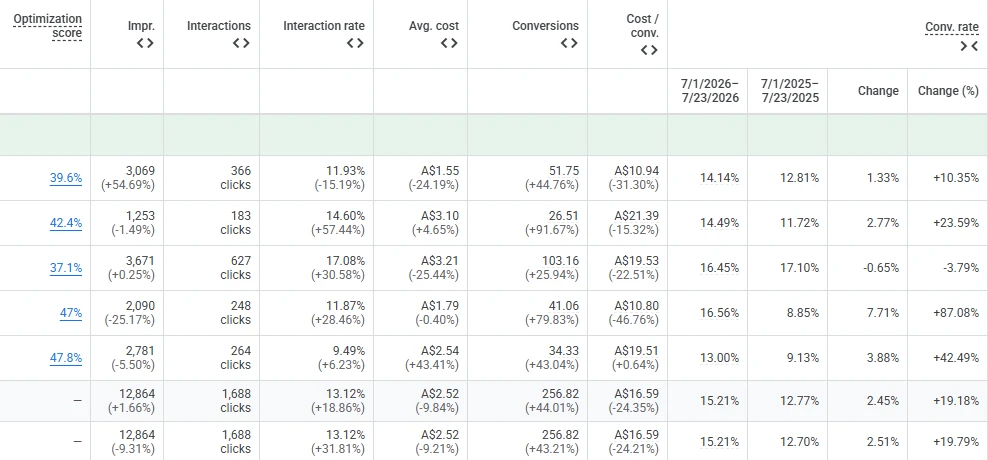
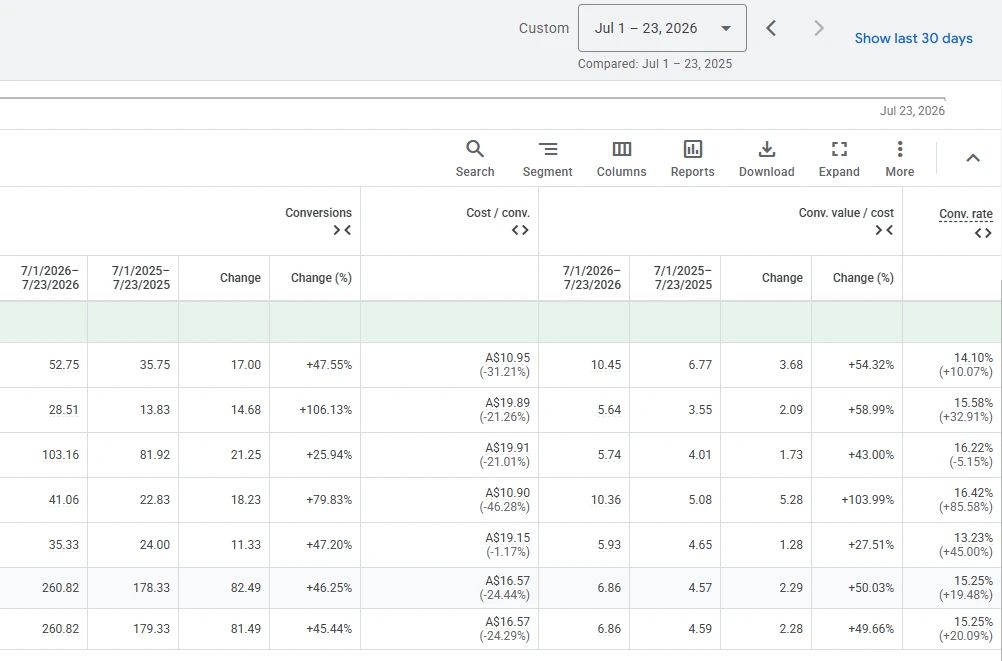
The conversion rate is the number we are most pleased with. Starting at 12.77% is already a good account. Lifting an already good account to 15.21%, averaged across every campaign, is much harder than doubling a bad one.
ROAS improved by 50%, from 4.57x to 6.86x. Cost per conversion dropped 24%. Combined with a small budget increase on one campaign, that produced 46% more conversions, up from 178 to 261. Total advertising spend rose by only 10%.
That is the part worth sitting with: a 10% budget increase returned a 46% increase in conversions. Every extra dollar worked significantly harder than the dollar before it.
| Metric | Before | After | Change |
|---|---|---|---|
| Conversion rate | 12.77% | 15.21% | +19% |
| ROAS | 4.57x | 6.86x | +50% |
| Cost / conversion | A$21.93 | A$16.57 | -24% |
| Conversions | 178 | 261 | +46% |
| Click-through rate | 11.04% | 13.12% | +19% |
| Average CPC | A$2.80 | A$2.52 | -10% |
| Ad budget | — | — | +10% |
The account average hides some standout individual results.
Impressions across the account rose just 1.7%. Clicks rose around 20%. The gains did not come from buying more reach. They came from earning more from the reach that was already there.
Not every account needs a rescue. Some need a steady hand, disciplined testing and someone who resists the urge to change things for the sake of it.
If your Google Ads account is already performing reasonably well and you have been told there is nothing left to gain, there usually is. It just looks like a 19% lift rather than a 200% one, and it is built one test at a time.
We specialise in Google Ads for healthcare and medical practices, and in disciplined, ongoing optimisation for accounts that are already well set up — not rebuilds for the sake of looking busy.
 0413 107 893